homo015 | 2006

Trace Being

Richard Kamerman

abandon yourself, and there you are

Endings...

So, this is it. The final entry of the blog. It's been really fun at times and equally frustrating at times (sometimes simultaneously and most of the time the frustration was the fault of my self-imposed deadlines) but I can definitely say this process has helped me grow in ways I didn't expect. I want to have some grander, or at least more specific, parting words to wrap things up but I can't really find them. Partly, I guess, because I know this isn't really an end. The end of the blog means the begining of trying to record a final piece. Which could be easy as cake after exploring these past two months of options or could prove endlessly problematic as I try to sum it up.

It seems, as makes logical sense for better or worse, that after a few weeks away from this process, my musical instincts have wandered in what sounds like a suddenly new direction. So that's what's getting posted now. But I have yet to decide if I'm going to be able to reconcile this with what the blog was all about or whether I will have to choose a particular direction for the released track.

What you have available to download here is a first on the blog in multiple ways. It is not only the first introduction of my own handwired electronics as a performance tool (other than piezo contact mics) and the first time I've used any trash percussion (specifically here a pair of metal shelves that I often have played as gongs) but it is also, most importantly, the first track that is not recorded in a single take. In fact, despite being less than 5 minutes, it is hobbled together out of 4 separate recordings I have made recently.

Two tracks were recorded "playing" several small motors (run on a found computer power supply and each pulsing off of a timer circuit) against various contact miked metal surfaces and two tracks were also recorded playing cymbals using a technique derived from the work of percussionist Sean Meehan. And then I chopped them up and pulled bits and pieces together from each to create this single sketch. I like the sounds that develop in the contrast of pure cymbal tones against the rattling motors and I wish I could have made this piece longer but there wasn't enough material recorded. So, I created the best short statement I could from what I had at hand.

Download HERE or listen below (encoded with winlame).
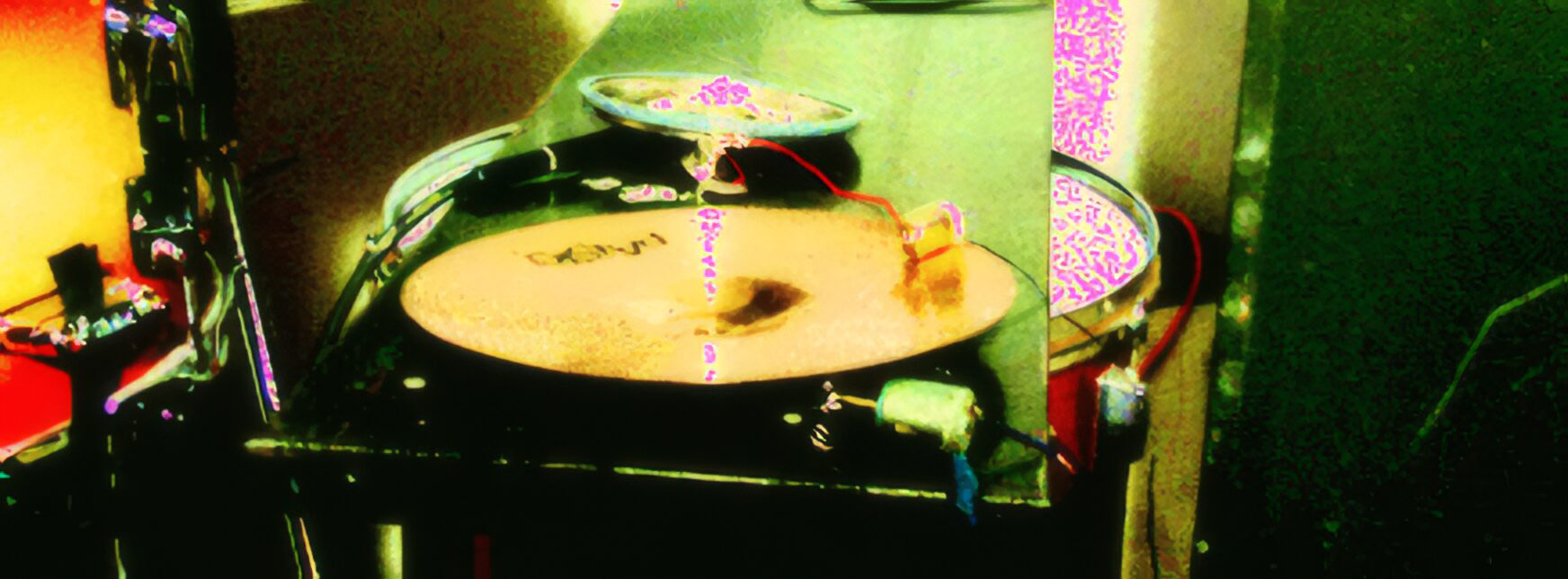
electronics and cymbal detail from the November 1, 2006 recording

Duet for Cymbals and Hacked Electronics

4:20
download mp3

Excuses, excuses.

So, here I am, 5 days late on the new post and still with nothing ready to upload.

It's the final post that's supposed to have been up last friday morning too.

Maybe I have some strange subconscious aversion to the idea of this blog ending. Although it's not really an ending since I still have a final piece to work out from this process...

Truth is, I don't want to end this on a fizzled note. I'd like the last post to be as strong as the first and for that reason I feel it ought to be a new begining in and of itself rather than re-hashing of prior ideas due to lack of time to really work. And life simply got too busy lately.

But by a week from today, I guarantee there will be a new post, with a recording of some recent electronics work, where I will properly say goodbye to the blog.

But for now, this is the only update I can provide.

Pick it as early as possible brontosaurus

I had hoped to follow last week's post by recording a short percussion piece without any laptop involvement and then doing a similar sort of processing on it as I had the guitar track. But I didn't quite make it far enough in time. Instead I'm simply posting the 2 good short takes from a few hours of recording to be enjoyed as they are, without that second phase of laptoppery. Both follow a roughly similar structure but each has its own highly distinctive stylistic quirks. Maybe if I have an opportunity I'll process one of these some time over the week as an extra bonus entry on the way to the upcoming last post of the blog.

But this was still very productive for me. The session these came from constitutes the first recordings I've made on percussion without the use of a laptop. In ways the computer was a bit of a crutch as I was depending on it to develop drones so that I could move from texture to texture seamlessly. Here all of my gestures are totally bare and, although I did a fair amount of experimenting in this direction very casually during the prior weeks that dealt with percussion (since I did keep my gear set up 24/7), I never had to exercise the kind of focus I do here to make it sound like more than just a series of technical experiments.

On these tracks I play the usual inverted eBowed snare drum and ride cymbal along with a floor tom and a 10" splash cymbal using a cello bow, various mallets brushes etc, a piezo contact mic run through a volume pedal to a 15w guitar practice amp placed under the snare, and an acoustic guitar pickup run to a battery-powered 3w microamp.

Download HERE and HERE or listen below (encoded with winlame).
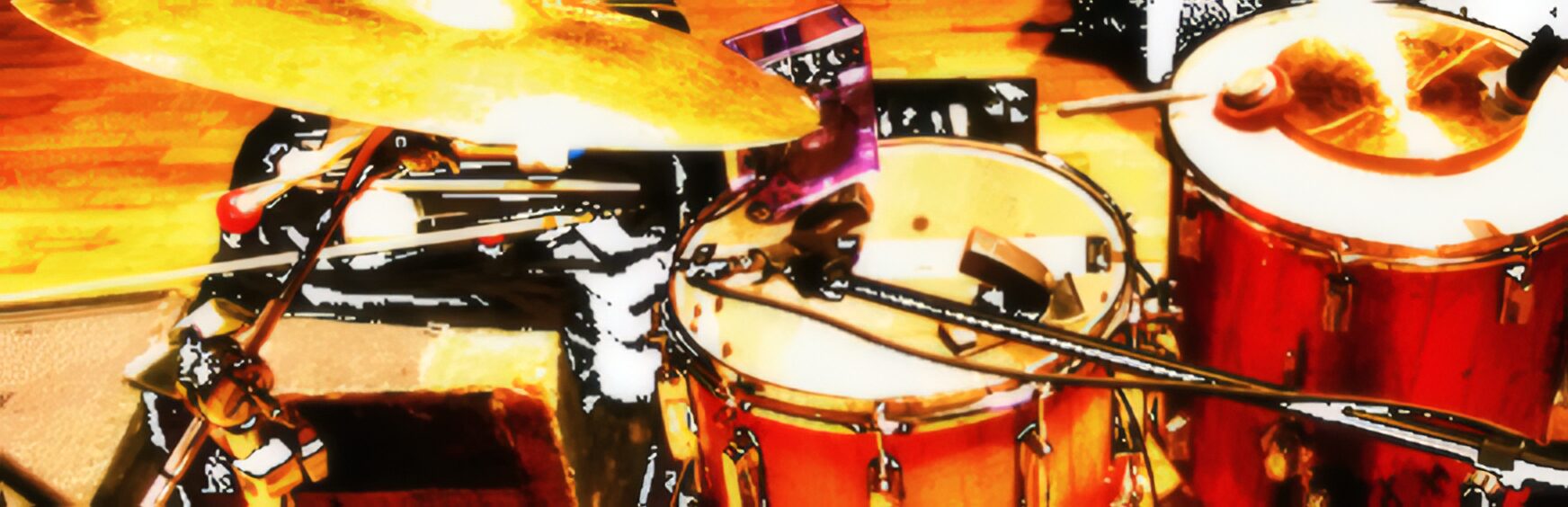
amplified percussion setup for the October 13, 2006 recordings

10132006 Amplified Percussion

9:07
download mp3

10132006 Amplified Percussion 2

6:23
download mp3

instrumentlessness

Feels like it's been ages since I updated the blog. So, this week I decided to try something new. I took the piece from the last update and played it back in Live in order to process it as a second perforative phase. I was able to transform the sound to a much greater degree by isolating the steps of playing and processing into separate actions (conceptually separate musicians but not playing in real time). I learned the hard way that a couple of new plugins work really well in real-time but don't actually save your actions in order to render out the performance when you're done. So, if I keep using them, I may need to record my output directly to another file while I play the Live interface.

The timbres reached here are very different than most of what I've done on the blog before but won't be particularly surprising to those familiar with my older work.

Download HERE or listen below (encoded with winlame).
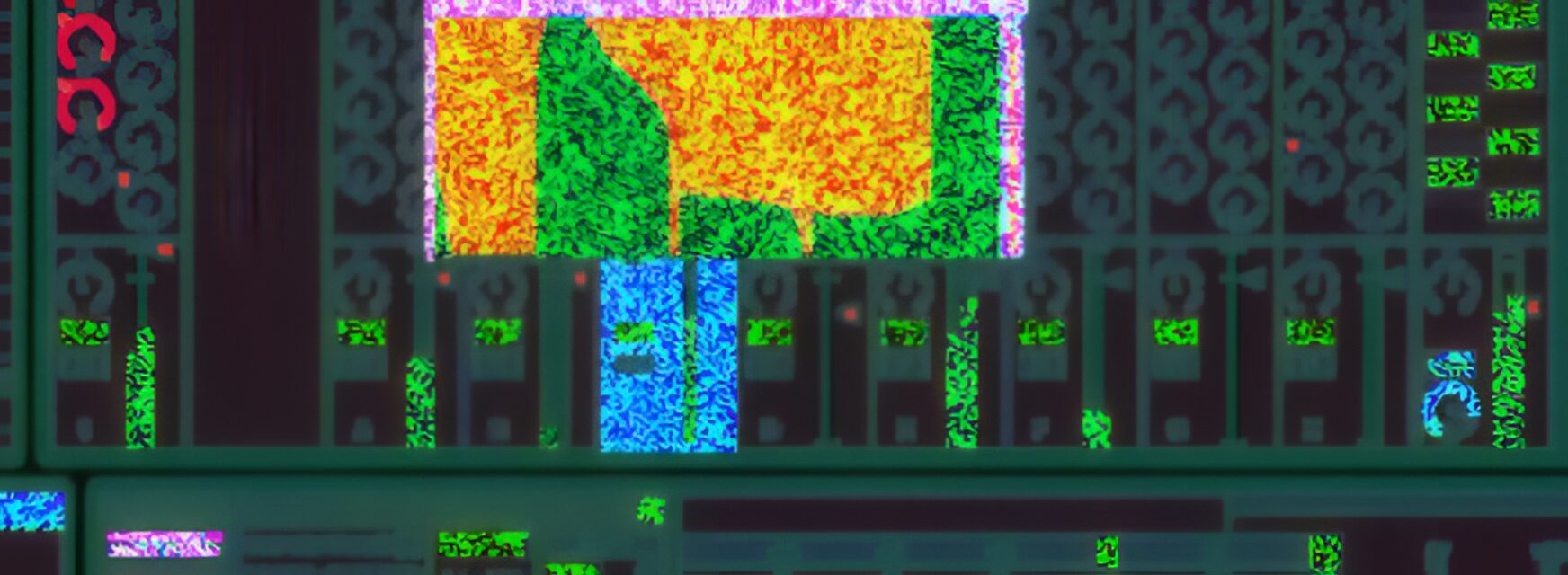
laptop processing screen from the October 5, 2006 recording

10052006 Laptop Processing

18:04
download mp3

beginnings revisited

After the prior confusion of this week, I finally sat down and recorded some more sound with the resonator guitar. I should note, the set-up has expanded somewhat since last time. In addition to the contact mic, I wired a jack onto a very weak, loosely hand-wound guitar pickup I had made a while ago and used that to amplify the string vibrations in interesting ways. In order to control it, I ran it through a radio shack dj mixer and to a tube preamp before it went to the practice amp. The contact mic as well was colored by a matching preamp along the chain with its volume pedal. And the guitar too was still fed to the amp using the piezo I had installed on the resonator cone.

I tried to avoid directly touching the strings as much as possible and any time I could assemble an arrangement of objects such that sound would gently shift over time without my involvement I took advantage of the possibility.

Note: updates will now continue on a thursday schedule and I am skipping next week due to ErstQuake.

Download HERE or listen below (encoded with winlame).
amplified resophonic guitar image from the September 21, 2006 recording

09212006 Amplified Resophonic Guitar 2

26:12
download mp3

The requisite silent blog entry

I started this week with a particular intention - I figured that if the first month was an exploration of various instruments and their sounds, month two should be about shaping what I've discovered into a cohesive whole. So I started trying to write a score for a trio of resonator guitar, electric guitar, and percussion of which I would continue to rewrite and re-record segments until the end of the blog. But that didn't work well.

I found the score getting unnecessarily complex really quickly. And if there's anything that I feel I have learned over the first 4 weeks of Trace Being, it is restraint as an improvisor. Shame that restraint didn't instinctively carry over onto paper as a composer.

But I guess that's how it goes. I decided that I would post the beginings of the score anyway with the explanation that I knew the parts were overdone. However, tonight when I tried to scan in the first 8 minutes or so that I had written, the scanner decided not to work. Which seemed a fitting omen that writing and posting that score was not the proper course of action yet.

Following this, I sat down again with my resonator guitar to begin month 2 on the same instrument that opened the blog and impose upon it the newer improvisational logic that has evolved since it was last used.

The result: a piece so full in its restraint that there is one section nearly 8 minutes long where I take no active involvement in the unfolding of sound. HOWEVER, I did not monitor this recording as I made it and found after the fact that something was making a lot of unexpected, popping/clicking noises. So much so as to destroy the whole point of the non-moving pure sounds and make the piece nearly unlistenable.

So, I plan to re-record before thursday and post audio at that point. But I couldn't just "forget" to update on schedule, so this text was in order.

Riding more than trace

I am finding a very natural comfort settling in with this arrangement of amplified percussion and laptop processing that seems to have been the unavoidable result of the first month blogging Trace Being. The recording available today is the longest piece I have recorded for the blog and, as far as I can remember, the longest successful piece I have recorded in at least half a year.

Last week I was hesitant to let the cymbal become a focus in the music (since the impetus had been to explore the snare itself) and, when I wound up in a new texture that was all about the cymbal, I found I cut it short. So this week picks up where that left off in a way by switching it up and emphasizing the meatier sound of the ride cymbal while using the snare as one of the secondary elements. Over the week I also pulled out more toys that had been part of my arsenal when playing the primary skin of the snare for a pair of pieces I released earlier this year on the limited CDr To Generate and Transform (e.g. "Killing The Self, If You Can Find It" shared in .ogg at my Ruccas page), including but not limited to a 10" splash cymbal, a tibetan singing bowl, a cello bow, and a wider assortment of brushes and mallets. I also added a mixer to the signal chain, running the laptop inputs off of the auxiliary sends in order to mix a 3rd microphone (placed at the practice amp under the snare drum) into the sound. In many ways I would like to add a second drum so that the body of techniques I had developed before flipping my snare upside down can be available options as well but that was not possible in time for this week's update.

In the name of full disclosure and comprehensive documentation, the group of plugins I have settled on for the moment are: Elogoxa Elottronix XL, ArcDev Hosebeast, Camel Audio CamelCrusher, mda Degrade, mda Detune, Ableton filter delay, Ableton resonators, Tweakbench Grumblebum, Pluggo Nebula, and Audio Damage Filterpod.

Download HERE or listen below (encoded with winlame).
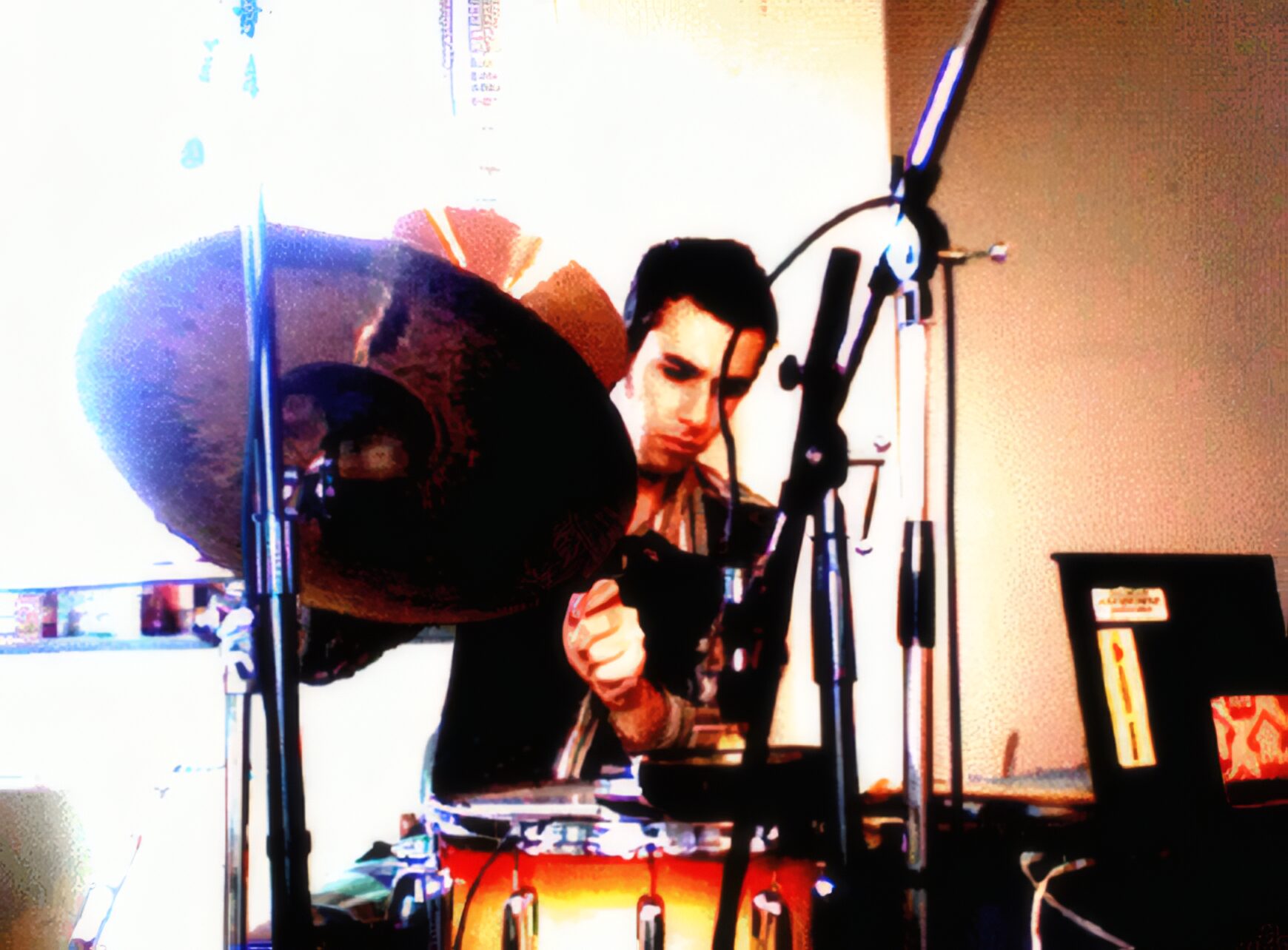
laptop and amplified percussion setup from the September 9, 2006 recording

09092006 Laptop and Amplified Percussion 2

25:56
download mp3

more snary stories to tell in the dark

This week, I decided to continue exploring the eBowed snare texture that I started working with last week. The big difference now would be the addition of my laptop for the first time on this blog. I have grown accustomed to running Ableton Live with an array of VST plugins as return channels to process the acoustic sounds I'm working with but had been avoiding the laptop as a sound transforming/generating tool recently. Nevertheless, this seemed the time to bring it back. I think I may have gone a little too far with some of the tighter delays and when I recorded I felt a lot more continual movement and panning of sounds than I hear in this piece listening back - but there's gotta be something to keep working on in the future.

Here I played the upside down snare drum with 2 eBows again and the contact mic->volume pedal->practice amp under the snare drum to make it vibrate even more as before. But there were two changes to this set-up even before effects were involved. I ran an acoustic guitar pickup to the practice amp as well as the contact mic, and I play a 20" ride cymbal with a soft bass drum beater on this recording in order to fill out some lower frequencies that otherwise would not have been woken up much (if at all) by a rattling snare drum.

Download HERE or listen below (encoded with winlame).
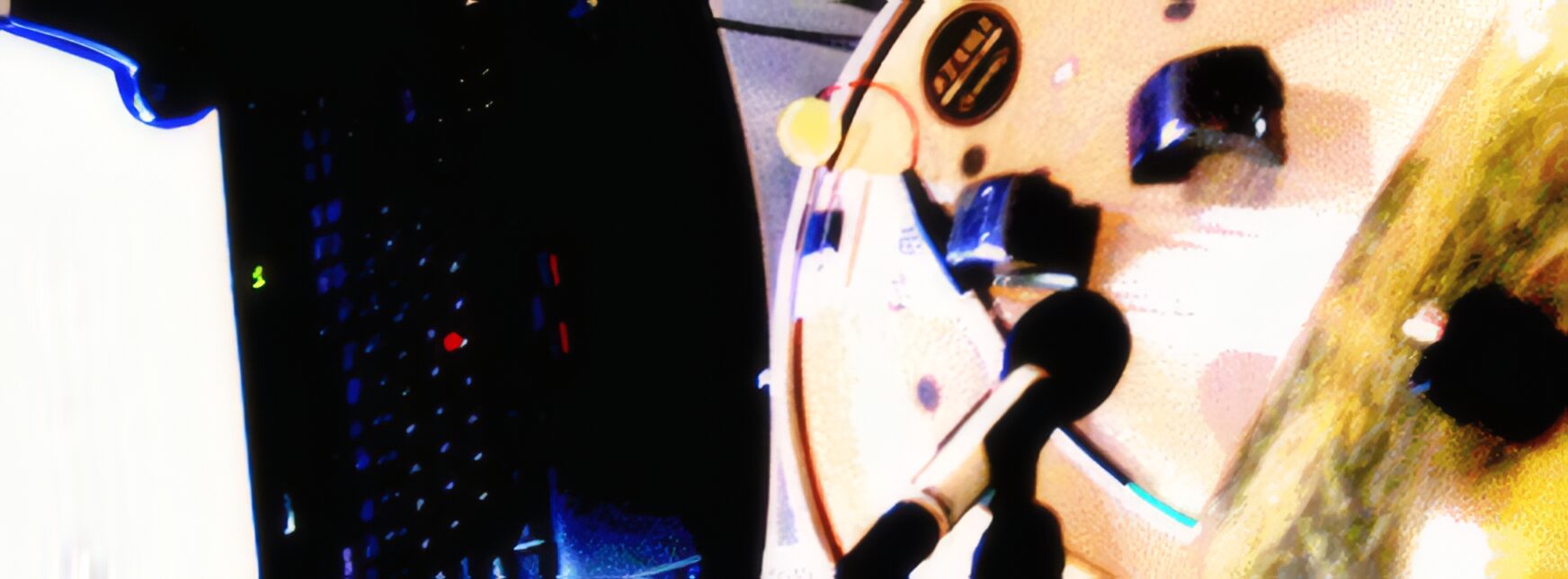
laptop and amplified percussion detail from the September 4, 2006 recording

09042006 Laptop and Amplified Percussion

12:03
download mp3

Just diggin' on the snare you wear

I’m a little frustrated right now. While the piece I uploaded last week was pretty well fleshed out as a clear exploration of an instrument, this week all I have to offer are a pair of smaller sketches that evolved out of a completely failed experiment in working with silence and thinning out the density of sound in my work.

I decided to pick up my electric guitar again for the first time in few months and, in keeping with last week's lack of processing, I kept the laptop out of the way here as well. I should note that the guitar itself is a cheap, generic, solid-body electric but I have modified it in a couple of ways:

1) the pickups have been rewired to create various unpredictable feedback loops within the 5-position pickup selector switch .
2) a broken string was pulled under the others and wound around a screw that holds the pick guard in place such that it vibrates sympathetically off of some of the strings. (I have been thinking about going further with this jerry-rigged sympathetic strings idea but there hasn't been time, so there is only one string for now.)

The signal was further distorted by a wah pedal and an electro-acoustic sustainer. I ran the guitar through a volume pedal before the effects and, despite my best efforts, the logic of sound vs. silence was manifest more effectively as acoustic vs. amplified sound. Furthermore, as you will hear, there was a snare drum out in the room, making the issue of amplification into an issue of percussion when the snares would rattle every time the amp got louder. So I magnified this idiosyncrasy rather than eliminating it by putting the snare directly in front of the amp, about a foot away, and recording it as I played (in addition to recording the amplifier and the guitar as an acoustic instrument).

Download HERE or listen below (encoded with winlame).
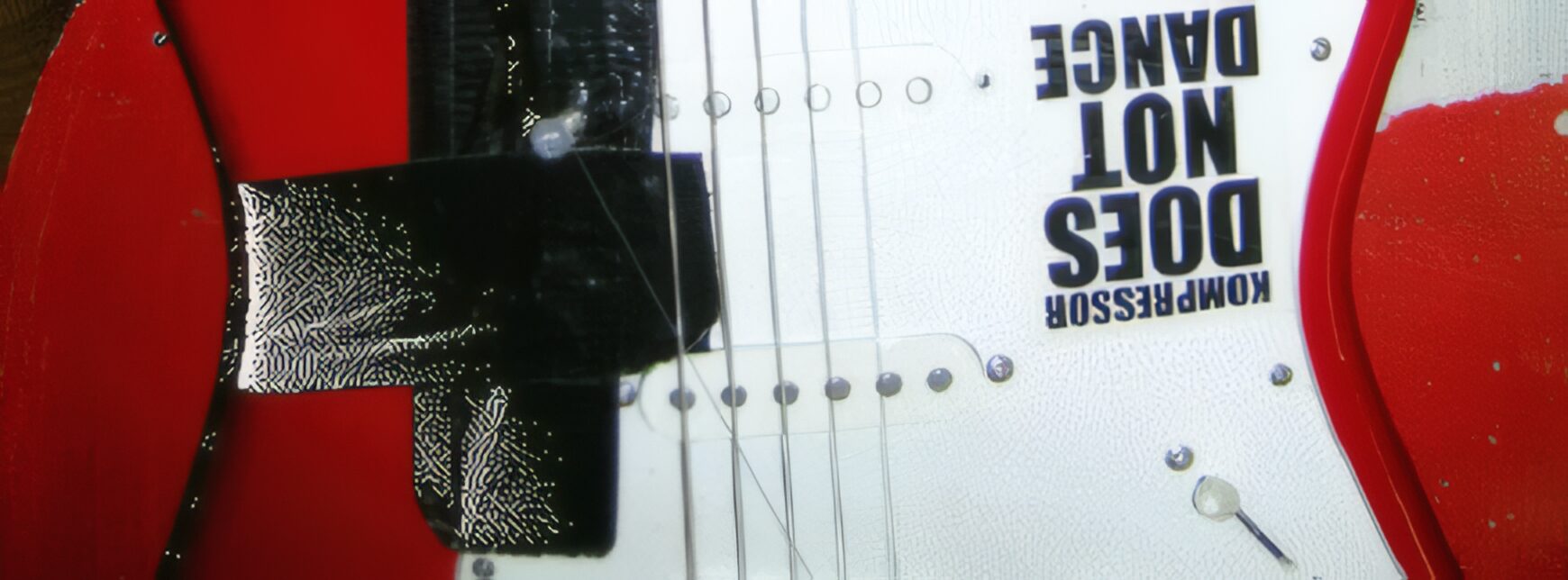
electric guitar detail from the August 28, 2006 recording

08282006 Electric Guitar

4:12
download mp3

Excited by the sound of the vibrating snare drum, I pulled it aside and spent my spare moments over the past few days playing it upside down with a pair of eBows and the contact mic/volume pedal/practice amp assembly from last week's resonator set-up. For the sake of your listening: drum mic panned left, amp mic panned right, and there’s some pretty huge dynamic range on this track, so don't push the level of the begining or you’ll probably be reaching for the volume dial later. Although this track isn’t the most musically inspired, the textures I got from the technique seem particularly cool as a sound source for live processing. So the laptop will definitely be used in this context next week.

Download HERE or listen below (encoded with winlame).
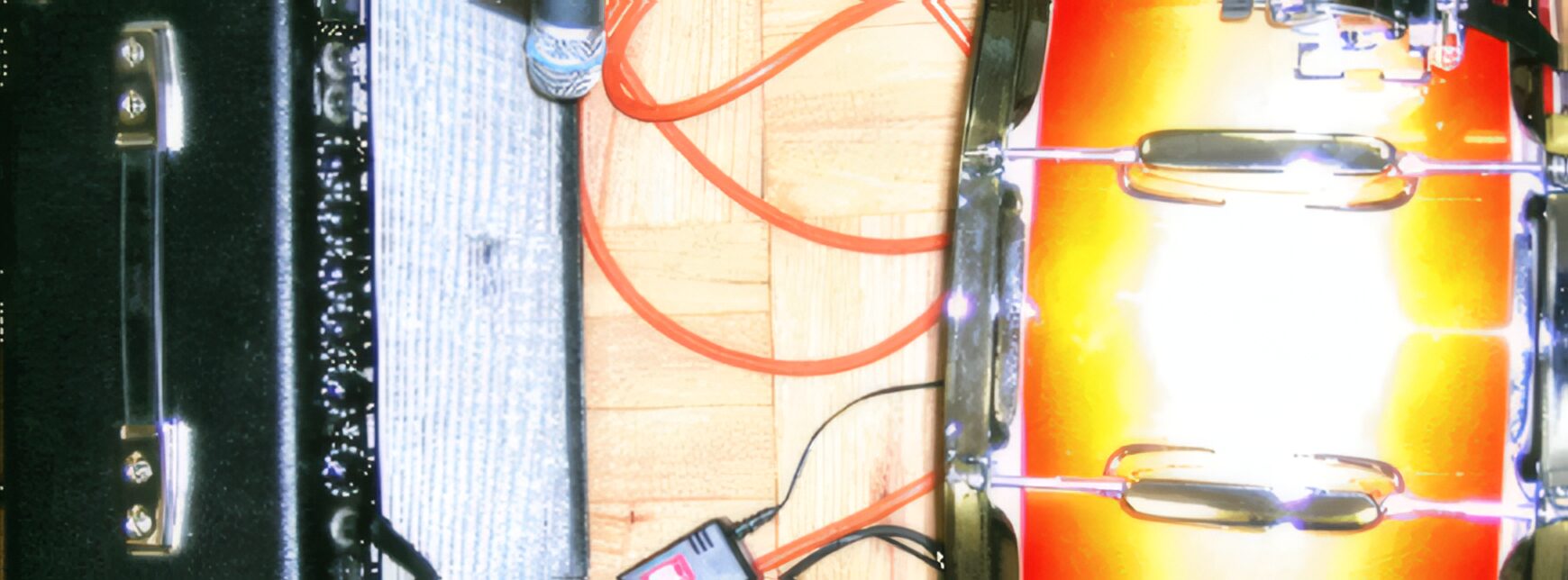
amplified snare drum detail from the August 28, 2006 recording

08282006 Amplified Snare Drum

7:52
download mp3

while my amplified resophonic guitar achingly moans

For this first recording, I played my resonator with the assistance of 2 eBows, a bar slide, the top of an altoids tin, and a slightly heavier metal disc (3" diameter). It was amplified using 2 contact mics - one taped to the resonator cone inside, the other freely movable/re-positionable around the strings. The level of the second contact mic was controlled using a volume pedal. Both ran to a 15w guitar practice amp, gained just into a controllable element of feedback. A dynamic mic was placed at the amp to record. No mic recorded the acoustic guitar tone directly. There was no additional processing of the sound.

Download HERE or listen below (encoded with winlame).
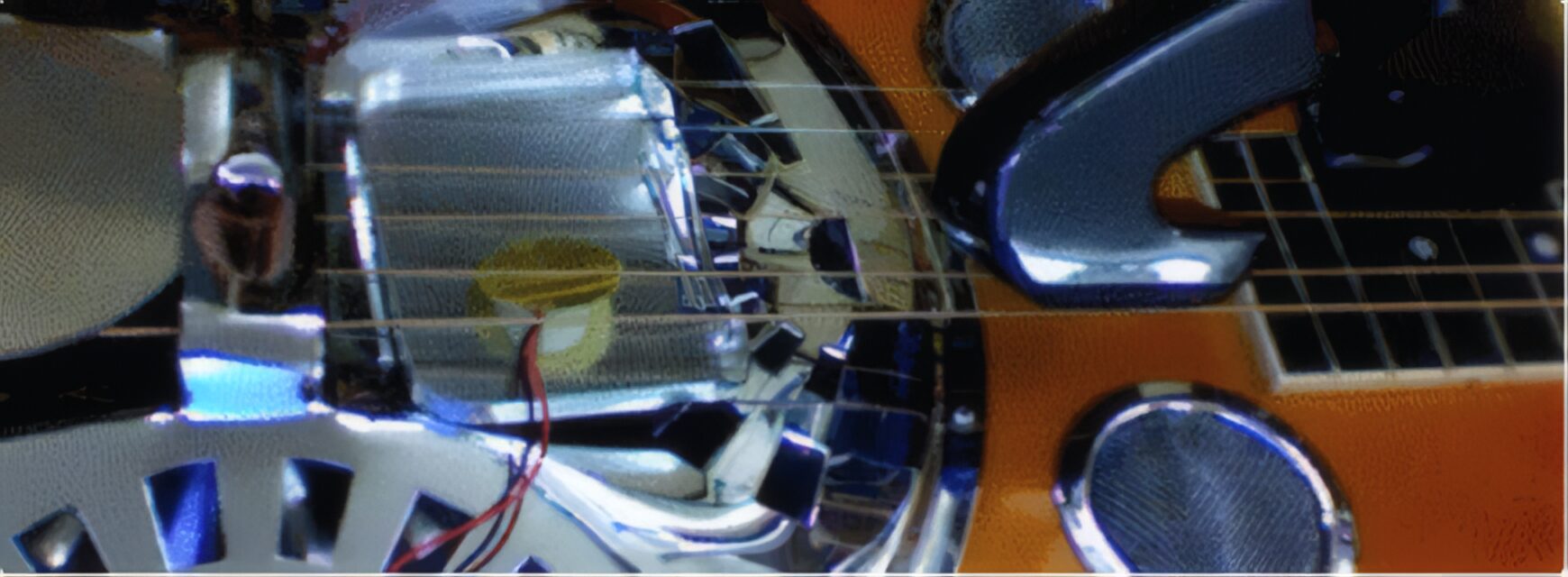
amplified resophonic guitar detail from the August 17, 2006 recording

08172006 Amplified Resophonic Guitar

18:32
download mp3

Let there be blog.

When I first birthed the general idea for the Trace Being blog at another site, I wrote about the importance of beginnings and the need to treat such moments with their proper respect. This now is an even more exciting liminal crossing than the last as it simultaneously signals both a beginning (of this blog and my presence at homophoni) and an end (of the one prior).

In the entries to follow over the next 2 months, I will be publicly blogging a flow of ideas in my music. Audio will be posted once a week with supplemental text, images, etc. and non-musical entries may be occasionally posted in between. By the end of this blog's life, a final composition should organically emerge.

For the purpose of a more calculated evolution of sound, I will carefully document the manner in which each recording is created, which I hope will be as interesting to you, the reader, as it is useful for me and my process - as an effort, in modes of sound production, to find traces of being.